As investment managers expand their offerings beyond traditional commingled funds, separately managed accounts (SMAs) have become an increasingly important growth lever—particularly with institutional allocators seeking customization, transparency, and control
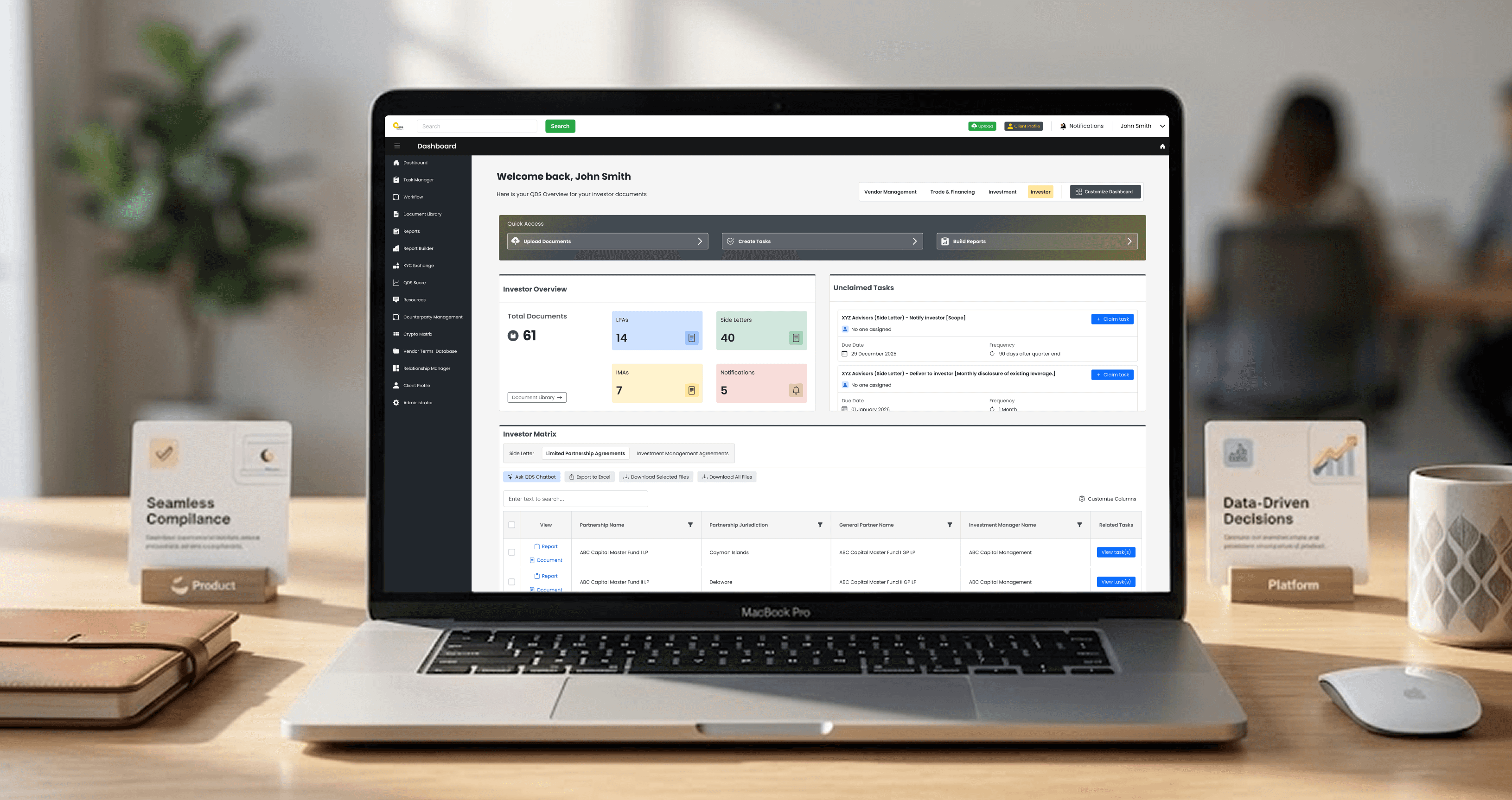
As investment managers expand their offerings beyond traditional commingled funds, separately managed accounts (SMAs) have become an increasingly important growth lever—particularly with institutional allocators seeking customization, transparency, and control. While SMAs open the door to new capital, they also introduce a level of operational and contractual complexity that many firms are not equipped to manage.
Too often, SMAs are managed outside core workflows, tracked in spreadsheets, or monitored through institutional memory. As firms scale, this fragmented approach creates real risk. The question is no longer whether managers should support SMAs, but whether they can do so and maintain visibility and control across all accounts they manage.
The Problem: Fragmented Oversight Across Managed Capital
Most investment managers still organize their oversight around individual investment accounts. Commingled funds live in one set of systems, while SMAs—along with co-investments and other bespoke arrangements—are tracked elsewhere. Each account may have its own:
Investment guidelines
Reporting obligations
Fee structures
Liquidity terms
Client-specific investment, trading, liquidity, or operational restrictions – often embedded in IMAs or side letters
On their own, these differences are manageable. Taken together and layered across multiple accounts, they become difficult to monitor consistently. Teams are left answering critical questions manually:
Which accounts have bespoke reporting requirements?
Where do client-specific investment or operational restrictions differ from the commingled fund or standard mandate?
Which fee or expense terms apply to which client?
Without centralized visibility, firms risk operational missteps, compliance gaps, and strained client relationships.
One Dashboard for All Managed Capital
To efficiently manage investment accounts and achieve a scalable infrastructure, firms need to move beyond vehicle-by-vehicle oversight toward a unified, firmwide view of managed capital.
A single dashboard allows managers to track obligations, restrictions, and economics across:
SMAs
Commingled funds
Co-investments
Other managed account mandates
This model enables teams to view all investment accounts through a consistent governance lens. The result is clearer accountability and fewer surprises.
This type of centralized oversight supports multiple functions at once:
Compliance teams gain confidence that client-specific terms are being followed
Operations teams can manage reporting and notice requirements efficiently
Investor relations teams can respond accurately to client inquiries and due diligence requests
Most importantly, leadership gains the ability to assess risk and scalability across the entire platform—not just individual accounts.
Turning SMA Agreements into Actionable Data
A dashboard alone is only as powerful as the data behind it. For most firms, SMA obligations live in static documents: IMAs, side letters, and investment guidelines stored as PDFs. Extracting requirements from those documents requires manual review, making active oversight nearly impossible.
Turning SMA agreements into actionable data can solve for these operational requirements.
By breaking these agreements down into structured, term-by-term interactive reports, firms can:
Identify which accounts have bespoke investment restrictions, reporting obligations, or operational requirements
Compare terms across SMAs and commingled vehicles
Detect inconsistencies before they become operational issues
Support faster, more informed negotiations for new accounts
This approach allows firms to move from reactive document review to proactive governance. Instead of asking “Where does this obligation live?”, teams can see it instantly—and understand how it fits within the broader portfolio of managed capital.
Why This Matters Now
Institutional allocators expect managers to demonstrate strong SMA governance during due diligence. Firms that rely on spreadsheets and ad hoc processes may find it harder to scale SMA relationships—or to defend their controls when questioned.
Conversely, firms that centralize SMA and fund oversight are better positioned to:
Support growth without significant increases in headcount
Reduce operational and compliance risk
Deliver consistent client experience across accounts
In today’s environment, visibility is not a luxury but a requirement.
How Quadrangle Supports Centralized SMA and Fund Oversight
Quadrangle’s contract lifecycle management (CLM) solution is purpose-built for investment managers navigating complex portfolios of SMAs, commingled funds, and bespoke account mandates. Our AI-powered platform transforms static agreements into structured, term-by-term searchable data—giving firms a single source of truth for tracking terms and obligations across their entire managed capital base.
With Quadrangle, firms can:
Track SMA, other investment vehicle, and side letter obligations in one centralized platform
Gain term-level visibility across IMAs, investment guidelines, and related agreements
Identify client-specific investment restrictions, reporting requirements, and economic terms immediately
Compare provisions across accounts to support consistency and informed negotiation
By pairing advanced technology with deep industry expertise, Quadrangle helps investment managers move beyond document storage to true contractual intelligence. Quadrangle’s technology allows firms to turn SMA complexity into a competitive advantage.

